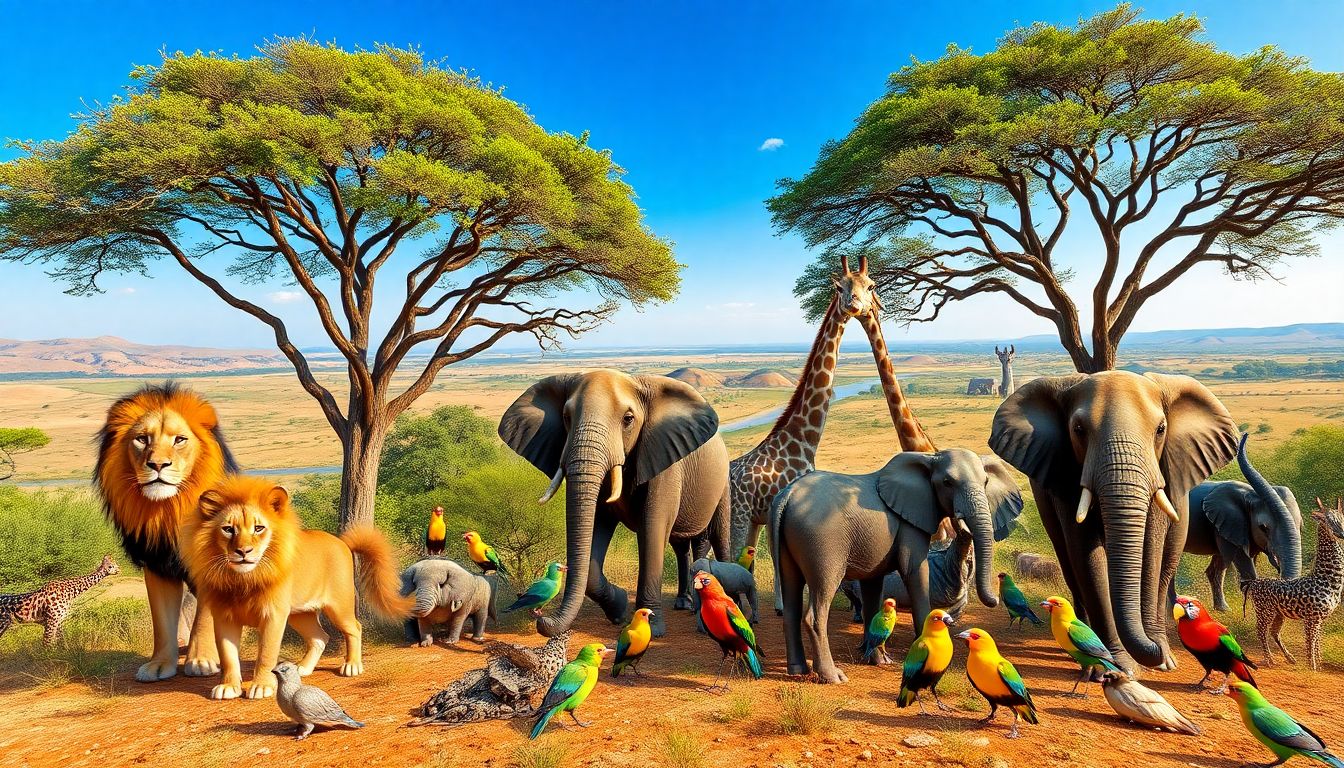
Exploring the Animal World: A Journey Through Diversity and Uncovering the Secrets of Animal Behavior
Animal behavior can be both astonishing and puzzling. Did you know that wolves can communicate through over 20 different vocalizations? This fascinating fact is just a glimpse into the incredible diversity of life on our planet. There are millions of species, each with their own unique traits and behaviors. This article aims to take you through that diversity, revealing the hidden wonders of animal behavior.
The Astonishing Diversity of Animal Life
From Microscopic Wonders to Gigantic Mammals: Exploring the Animal Kingdom’s Phyla
The animal kingdom is vast, with over 1.5 million known species, and millions yet to be discovered. This kingdom includes various phyla, each showcasing unique characteristics.
- Arthropods: The largest group, including insects, arachnids, and crustaceans.
- Chordates: Animals with a backbone, such as mammals, birds, and fish.
- Mollusks: Soft-bodied animals, like snails, octopuses, and clams.
Habitat Diversity: From the Deepest Oceans to the Highest Mountains
Animals inhabit a wide range of environments—from the deepest oceans to the highest mountains. This diversity shapes their way of life.
- Polar Bears: Adapted to icy Arctic regions.
- Deep-Sea Creatures: Unique adaptations allow survival in extreme pressure and darkness.
Adaptation and Evolution: Shaping Animal Diversity
Natural selection plays a vital role in shaping animal diversity. Over generations, species adapt traits to survive.
- Camouflage: Chameleons change color to blend into their surroundings.
- Long Neck of Giraffes: Helps them reach high leaves.
Unraveling the Mysteries of Animal Communication
The Language of Animals: Diverse Communication Methods
Animals use various methods to communicate, including visual signals, sounds, and chemical cues.
- Bird Songs: Some birds sing to attract mates or defend territory.
- Bee Dances: Honeybees perform dances to show other bees where to find food.
Decoding Animal Signals: Research Methods and Interpretations
Researchers study animal behavior using ethological methods, observing them in their natural habitats. Renowned ethologist Konrad Lorenz once said, “The essence of animal behavior lies in the social interactions.”
The Role of Communication in Survival and Reproduction
Communication is crucial for survival. It helps animals avoid predators and find mates.
- Alarm Calls: Some animals use specific calls to warn their group of danger.
- Mating Calls: Many species exhibit unique sounds to attract partners.
Social Structures and Animal Societies
From Solitary Existence to Complex Societies: Diverse Social Structures
Social structures vary widely among animals. Some prefer solitude, while others thrive in groups.
- Solitary Animals: Tigers and bears often hunt alone.
- Pack Animals: Wolves and lions live in groups to hunt and protect each other.
The Benefits and Costs of Social Living
Living in groups has its pros and cons.
- Benefits:
- Protection: Groups can fend off predators more effectively.
- Foraging Efficiency: Group living can lead to more food discovery.
- Costs:
- Competition for Resources: More individuals can mean more rivalry.
- Disease Transmission: Crowded conditions can lead to rapid illness spread.
Cooperation and Altruism in the Animal Kingdom
Some animals show cooperation and altruism, such as in kin selection.
- Meerkats: They take turns standing guard while others forage.
- Dolphins: Some will help injured members of their pod.
The Wonders of Animal Navigation and Migration

Innate Abilities and Learned Behaviors: How Animals Find Their Way
Animals use various navigation methods to find their routes. These can include:
- Celestial Navigation: Many birds navigate using the stars.
- Magnetic Fields: Sea turtles can sense Earth’s magnetic fields to guide their travels.
Amazing Migratory Journeys: Covering Vast Distances
Migration is a remarkable phenomenon, with some animals traveling incredible distances.
- Monarch Butterflies: Migrate up to 3,000 miles each year.
- Arctic Terns: Journey about 44,000 miles annually between breeding and wintering grounds.
The Environmental Factors Influencing Migration Patterns
Changing climates and habitat loss impact migration paths.
- Climate Change: It alters food availability, forcing some species to change their routes.
- Habitat Loss: Deforestation affects migratory routes for many birds.
SPONSORED BY
“This Content Sponsored by Buymote Shopping app
BuyMote E-Shopping Application is One of the Online Shopping App
Now Available on Play Store & App Store (Buymote E-Shopping)
Click Below Link and Install Application: https://buymote.shop/links/0f5993744a9213079a6b53e8
Sponsor Content: #buymote #buymoteeshopping #buymoteonline #buymoteshopping #buymoteapplication”
Conservation Challenges and the Future of Animal Life

Habitat Loss and Fragmentation: Major Threats to Biodiversity
Habitat loss is one of the most significant threats to animals.
- Approximately 1 million species face extinction due to habitat loss and fragmentation.
- Urban development and agriculture rapidly decrease available habitats.
Climate Change and its Effects on Animal Behavior and Distribution
Climate change impacts behaviors and habitats.
- Polar Bears: Melting ice affects their hunting grounds.
- Coral Reefs: Warmer ocean temperatures lead to bleaching, harming marine life.
Conservation Strategies and Actions: Protecting Animal Diversity
Many strategies can help protect animal diversity.
- Habitat Restoration: Efforts to restore damaged ecosystems.
- Protected Areas: Establishing national parks and reserves to safeguard wildlife.
Everyone can play a role in conservation by supporting wildlife organizations and reducing our carbon footprint.
Conclusion
Understanding and protecting animal diversity is vital for our planet’s health. Each species contributes to the ecosystem, and their behaviors are remarkable windows into nature’s complexity. Join the movement to safeguard our world’s incredible animal life. Together, we can make a difference in preserving these wondrous creatures for future generations.
 General Explorer