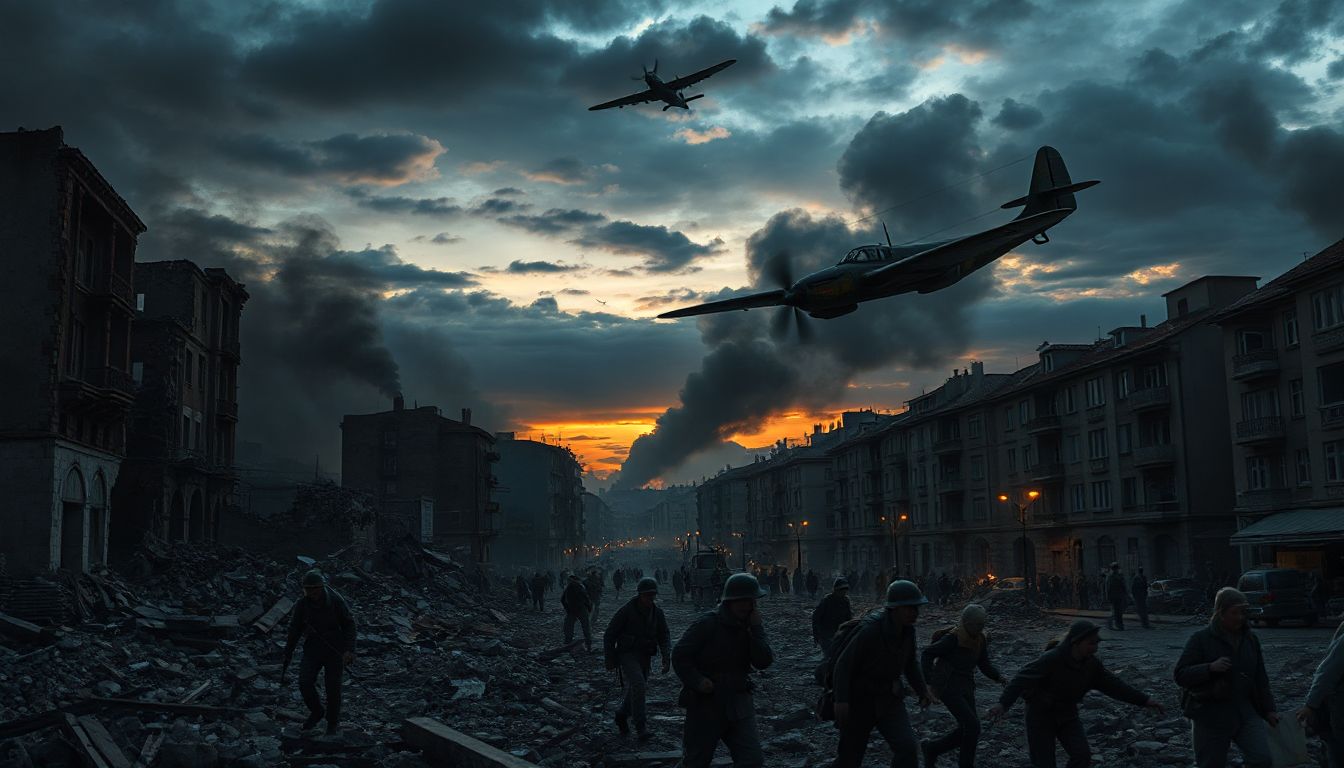
World War II: The Global Conflict, Immense Suffering, and Lessons for Today
Introduction
World War II was the most widespread and deadly war in human history. It changed everything—politics, society, technology. Millions of lives were lost, and entire countries were destroyed. Understanding this dark chapter helps us see how it shaped today’s world. It also reminds us why we must work to prevent such a tragedy from happening again. Learning from the past is our best tool for building a peaceful future.
The Origins of World War II: Causes and Catalysts
Historical Background and Aftermath of World War I
The war that ended in 1918 left Europe broken. The Treaty of Versailles in 1919 blamed Germany and demanded heavy reparations. This created anger and economic trouble, fueling unrest. Many countries faced political chaos, setting the stage for future conflict. War debts and hyperinflation made life harder for ordinary people.
Rise of Totalitarian Regimes
Adolf Hitler and Nazi Germany used resentment and fear to gain power. They promised to restore the nation’s pride. Japan looked to expand its empire through military conquest. Fascist leader Mussolini aimed to rebuild Italy’s strength by invading other regions. These regimes shared a common trait—an aggressive desire for domination.
Immediate Triggers and Escalation
The invasion of Poland in 1939 officially started the war. Western leaders’ policy of appeasement failed to stop Hitler’s plans. Allies signed treaties but didn’t act early enough. Diplomacy fell apart, leaving the world unprepared for the oncoming storm. These mistakes made the conflict even worse.
Major Battles and The Global Scope of the War
European Theater
Europe saw fierce battles. The Soviets fought at Stalingrad, marking a turning point. The Normandy invasion, or D-Day, opened the Western front. Countries like France, Britain, and the Soviet Union suffered greatly. Frontlines shifted many times, and civilians were caught in the middle.
Pacific Theater
Japan’s surprise attack on Pearl Harbor in 1941 drew the U.S. into the war. Battles like Midway and Iwo Jima became legendary. The fight extended to Okinawa, the last big obstacle before Japan’s home islands. Total war affected both soldiers and civilians in this region.
Other Theaters and Naval Warfare
North Africa and the Mediterranean saw key campaigns. Control of the seas mattered most. Naval technology improved drastically, making ocean battles fierce and decisive. The Battle of the Atlantic kept supply lines open for Allies.
Human Suffering and Societal Impact
Civilian Casualties and Displacement
The war’s death toll exceeds 70 million. The Holocaust alone murdered 6 million Jews and millions of other minorities. Millions of refugees fled their homes, searching for safety. Entire communities vanished and lives were shattered.
War Crimes and Atrocities
The Holocaust remains one of history’s darkest horrors. In occupied areas, prisoners faced unimaginable cruelty. Many civilians were victims of massacres and forced labor. These crimes showed what happens when hatred and power collide.
Economic and Social Consequences
Countries mobilized every resource for the war effort. Women and minorities entered roles once reserved for men. After the war, societies faced reconstruction and social change. Economies shifted, and new social movements began to take shape.
Technological Advancements and Their Long-term Effects

Military Innovations
Nuclear weapons changed the face of warfare forever. Advances in aircraft, radar, and computing gave soldiers new tools. These innovations made future conflicts even more destructive.
Scientific Contributions
The Manhattan Project developed the first atomic bombs. Medical breakthroughs, like antibiotics, saved many lives. Trauma care improved significantly, giving hope to wounded soldiers.
Impact on Post-War Global Power Dynamics
After the war, the U.S. and Soviet Union emerged as superpowers. They shaped global politics for decades. Organizations like NATO and the United Nations aimed to promote peace and prevent future wars.
Sponsored by:
“This Content Sponsored by Buymote Shopping app
BuyMote E-Shopping Application is One of the Online Shopping App
Now Available on Play Store & App Store (Buymote E-Shopping)
Click Below Link and Install Application: https://buymote.shop/links/0f5993744a9213079a6b53e8
Sponsor Content: #buymote #buymoteeshopping #buymoteonline #buymoteshopping #buymoteapplication”
Lessons Learned and Their Relevance Today
The Importance of International Cooperation
Early diplomacy can prevent war. Learning from failed efforts like appeasement shows the need for strong alliances. Today, institutions like the UN work to keep peace worldwide.
Combating Totalitarianism and Extremism
Recognizing early signs of authoritarian regimes helps stop atrocities. Promoting democracy and human rights is vital. History shows that silence and apathy lead to catastrophe.
Ethical and Moral Reflections
Remembering atrocities reminds us why values like tolerance and respect matter. Promoting understanding can prevent hate and violence from spreading. We all share a duty to stand against cruelty.
Actionable Tips
- Stay informed about world issues and history.
- Support groups working for peace and human rights.
- Teach others about the consequences of war.
- Encourage leaders to prioritize diplomacy over conflict.
Conclusion
World War II changed the world forever. It shaped today’s geopolitics, society, and technology. Yet, amid the suffering, lessons emerged—lessons about cooperation, morality, and vigilance. To create a more peaceful future, we must remember the past and stay engaged. Awareness, education, and international effort are our best tools to prevent history from repeating itself. The future depends on what we learn today.
 General Explorer