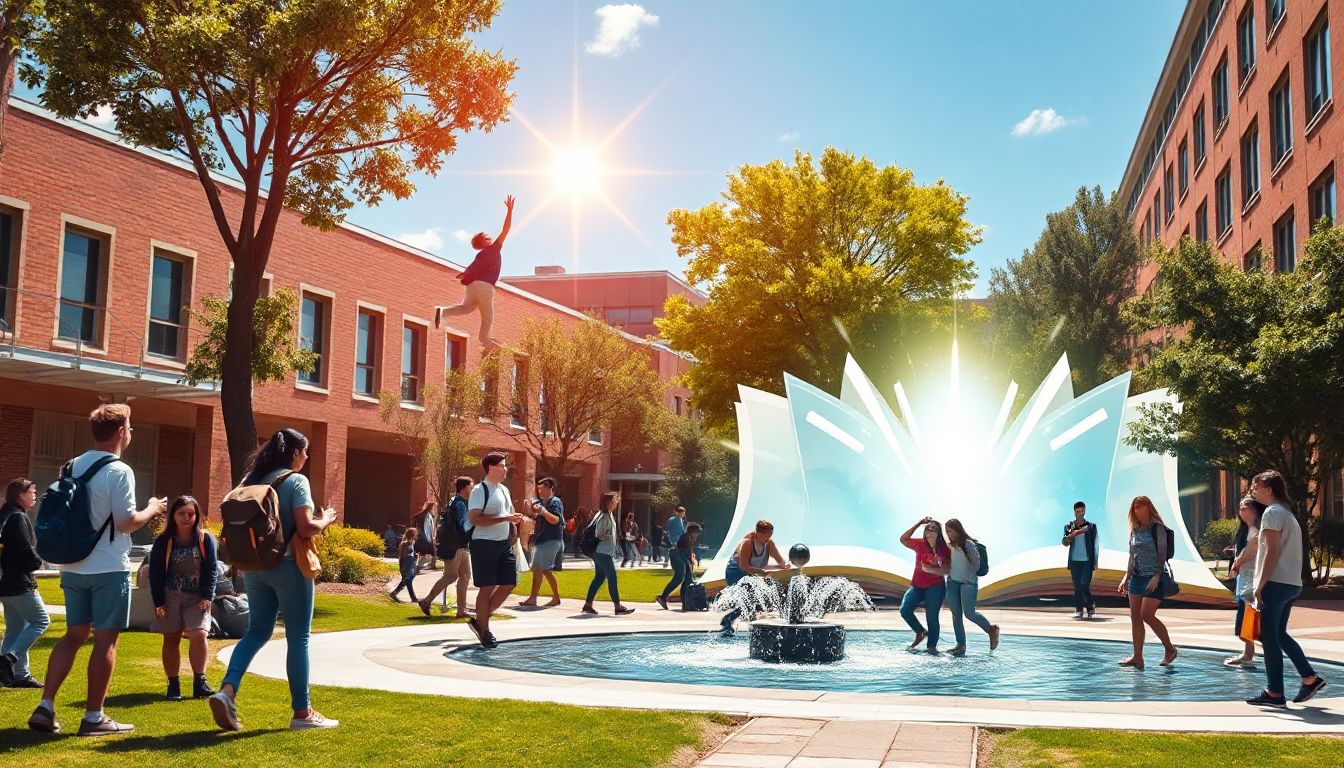
The College Experience: Unlocking Your Potential and Building a Bright Future for Academic and Social Success
Every year, millions of students step onto college campuses, ready for a life-changing journey. This isn’t just about classes; it’s about growing in every way possible. College gives you a unique chance to find out who you are, learn new skills, and make connections that last a lifetime. It’s a critical time that sets the stage for a successful and happy future. This article will show you how to master your studies, build a strong social network, grow as a person, and get ready for your dream career.
Section 1: Mastering Your Academics for a Solid Foundation
Strategic Learning and Study Habits
Getting good grades goes beyond just memorizing facts. Truly understanding what you learn makes all the difference. Try active recall, where you test yourself often without looking at your notes. Spaced repetition also helps; it means reviewing material over time instead of all at once. Knowing if you learn best by seeing, hearing, or doing can also make studying easier.
Actionable Tips:
- Use the Pomodoro Technique: study for 25 minutes, then take a 5-minute break.
- Create a weekly study schedule and stick to it.
- Visit campus tutoring centers for help with tough subjects.
- Use writing labs to improve your papers and essays.
Engaging with Course Material and Faculty
Taking part in your classes helps you learn more and makes your college experience richer. Speak up in lectures and discussions. This shows professors you are interested and helps you grasp tough ideas. Don’t be shy about seeking advice from your instructors or teaching assistants. They are there to help you succeed.
Real-world Example: Sarah joined in every class discussion for her history course. She also went to her professor’s office hours often. This led to her professor offering her a spot on a research project about ancient civilizations. This opportunity helped Sarah decide her future major.
Actionable Tips:
- Write down questions before each class to ask during discussion time.
- Go to professors’ office hours to get help or just to talk about your interests.
- Start study groups with classmates to discuss ideas and quiz each other.
Navigating Academic Challenges and Resources
College coursework can sometimes feel overwhelming. It’s common to face hard classes, struggle with time, or feel nervous before tests. But you don’t have to face these problems alone. Campuses have many support systems waiting to help you out.
Expert Quote/Reference: Dr. Elena Rodriguez, an educational psychologist, often says, “Learning to manage stress and bounce back from academic setbacks builds true strength. These skills are as important as the grades themselves.”
Actionable Tips:
- Meet with your academic advisor regularly to plan your courses and career path.
- Use campus counseling services if you feel stressed or anxious about your studies.
- Reach out to disability resource centers for any needed learning accommodations.
Section 2: Cultivating a Thriving Social Life and Network

Building Meaningful Relationships
Your college years are a prime time to make friends and build important connections. These social bonds boost your happiness and help you grow as a person. Strong friendships give you support, while professional ties can open doors in the future.
Real-world Example: Mark loved computers but joined the campus hiking club. There, he met students from many different majors. He discovered a love for nature photography and found a close group of friends who shared his new hobby. This club even inspired him to take an elective in visual arts.
Actionable Tips:
- Join clubs or organizations that match your interests, or try something new.
- Go to campus events like concerts, sports games, or open mic nights.
- Be friendly and open to meeting new people in your classes or dorm.
The Power of Networking and Mentorship
Connecting with others can do wonders for your future career and personal growth. Networking means building relationships with people who can help you, and you can help them. Mentors, who are experienced people, can offer guidance and advice.
Statistics/Data Points: Studies show that students who actively network during college often find jobs faster after graduation. Some reports suggest they also earn higher starting salaries, up to 25% more in some fields.
Actionable Tips:
- Connect with alumni through your university’s network or LinkedIn.
- Seek out mentors in your field of study or career interest.
- Attend career fairs and industry events to meet professionals.
Balancing Social Life with Academic Responsibilities
It’s exciting to have a busy social calendar, but it’s crucial to find a balance. You need to enjoy campus life while also keeping up with your schoolwork. Finding this sweet spot means you won’t miss out on fun or fall behind in classes.
Actionable Tips:
- Prioritize your commitments: schoolwork usually comes first.
- Set clear boundaries for social activities and study time.
- Practice self-care, like getting enough sleep and eating well, to avoid burnout.
Section 3: Personal Growth and Self-Discovery
Exploring Interests and Discovering Passions
College is a perfect time to try new things and find out what truly excites you. You don’t have to stick to just your major. There are so many subjects and activities to explore that can lead to surprising discoveries.
Actionable Tips:
- Take elective courses in areas completely different from your main studies.
- Participate in campus workshops, from coding to pottery.
- Volunteer for causes you care about to learn new skills and meet new people.
Developing Essential Life Skills
Beyond textbooks, college teaches you skills for life. You’ll learn to live on your own, solve problems, handle money, and talk clearly with others. These are transferable skills that help you in any job or situation.
Expert Quote/Reference: Maria Sanchez, a personal development coach, states, “The independence you gain in college—managing your time, your money, your choices—is foundational. It builds the confidence to face any challenge.”
Actionable Tips:
- Create a budget and track your spending to manage your personal finances.
- Learn basic cooking and cleaning skills for independent living.
- Practice effective communication by joining debate clubs or presentation groups.
Cultivating Resilience and Adaptability
College life isn’t always smooth sailing. You might face bad grades, personal setbacks, or just feel lost sometimes. Learning to bounce back from these moments, and adapting to change, makes you stronger. It teaches you to learn from your mistakes.
Real-world Example: After struggling in his first year, David almost dropped out. Instead, he sought help from his academic advisor and a campus counselor. He learned new study methods and stress coping techniques. This experience made him more determined and helped him excel in his later years.
Actionable Tips:
- Practice mindfulness exercises, like meditation, to stay calm and focused.
- Don’t be afraid to ask for help from friends, family, or campus support when you need it.
- See failures not as an end, but as chances to learn and grow stronger.
Sponsored By:

“This Content Sponsored by SBO Digital Marketing.
Mobile-Based Part-Time Job Opportunity by SBO!
Earn money online by doing simple content publishing and sharing tasks. Here’s how:
- Job Type: Mobile-based part-time work
- Work Involves:
- Content publishing
- Content sharing on social media
- Time Required: As little as 1 hour a day
- Earnings: ₹300 or more daily
- Requirements:
- Active Facebook and Instagram account
- Basic knowledge of using mobile and social media
For more details:
WhatsApp your Name and Qualification to 9994104160
a.Online Part Time Jobs from Home
b.Work from Home Jobs Without Investment
c.Freelance Jobs Online for Students
d.Mobile Based Online Jobs
e.Daily Payment Online Jobs
Keyword & Tag: #OnlinePartTimeJob #WorkFromHome #EarnMoneyOnline #PartTimeJob #jobs #jobalerts #withoutinvestmentjob”
Section 4: Preparing for a Bright Future: Career and Beyond
Leveraging Internships and Experiential Learning
Practical experience is key to moving from the classroom to the working world. Internships, co-op programs, and research projects give you real-world skills. They help you understand what a job is actually like.
Statistics/Data Points: Graduates who complete one or more internships often have higher employment rates. They also tend to earn starting salaries that are 10-20% higher than those without internship experience.
Actionable Tips:
- Actively search for internship opportunities during summer breaks or academic terms.
- Look into co-op programs offered by your university for hands-on work experience.
- Join research projects with professors to gain valuable experience in your field.
Building a Professional Portfolio and Resume
Your resume and a professional portfolio are your calling cards to future employers. They should clearly show off your skills, experiences, and what you have achieved. A well-crafted resume can make you stand out from other job seekers.
Actionable Tips:
- Tailor your resume for each specific job you apply for, highlighting relevant skills.
- Develop a professional online presence, like a polished LinkedIn profile.
- Create a portfolio of your best work, especially if you are in a creative or technical field.
Career Exploration and Planning
It’s smart to start thinking about your career path early. Explore different job options, understand what skills are needed, and keep an eye on industry trends. Developing a long-term career plan can guide your choices throughout college.
Expert Quote/Reference: “The best time to think about your career is now,” advises Michael Chen, a university career counselor. “Exploring options early helps you make smart choices about your major and internships.”
Actionable Tips:
- Utilize your university’s career services for guidance and job search help.
- Conduct informational interviews with people working in fields you find interesting.
- Attend career fairs and industry panels to learn about different professions.
Conclusion
The college experience is a remarkable time for growth and discovery. You have the chance to achieve academic success, build lasting social connections, and develop as a person. Your time in higher education is a powerful investment. Embrace every opportunity with enthusiasm. This journey will unlock your full potential and truly build a bright, fulfilling future for you.
 General Explorer